

Industrial

Proof in the Numbers: Ergonomics assessments improve comfort, quality, and retention

Our latest office ergonomics data shows that structured ergonomic assessments significantly reduce discomfort and deliver meaningful business impact. Among employees who completed follow-up surveys, productivity improved by 19%, work quality improved by 3%, and self-reported likelihood of staying in their job for at least another year increased by 40%. These findings reinforce that office ergonomics is not just about comfort; it supports safer work, better performance, and stronger employee retention.
Read more

All I Want for Christmas… is fewer MSDs in 2026 (How to set a smart ergonomics budget that cuts injuries, boosts productivity, and saves money)

This article encourages organizations planning their 2026 budgets to prioritize ergonomics by linking requests to real data—such as injury claims, supervisor challenges, and quality issues—to build a strong business case for investment. Whether reducing costs from strain injuries, boosting productivity and quality, or simply maintaining a strong safety culture, ergonomics programs and services can deliver measurable benefits.
Read more

Making Ergonomics Easy to Teach — and Easy to Use

Half of your workplace injuries are strains and sprains — Do half of your safety talks focus on ergonomics? Safety professionals know these injuries drain productivity, morale, and budgets. What if you had ready-to-go, interactive training kits that workers actually remembered and used — and the results were measurable? We’re so confident our microlearning kits […]
Read more

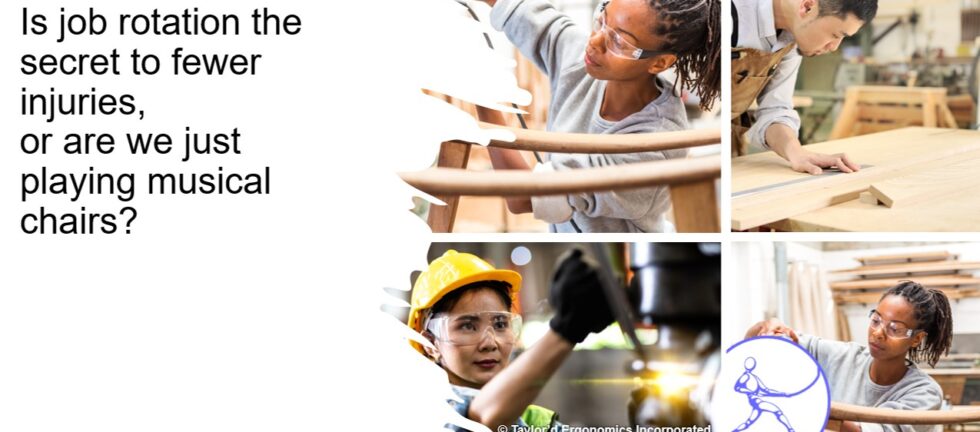
Is Job Rotation the Secret to Fewer Injuries, or Are We Just Playing Musical Chairs?

Job rotation refers to the practice of assigning workers to different jobs throughout the day, most commonly moving from one job to another after breaks and lunch. Job rotation is often touted as a strategy to improve workforce flexibility and reduce injury rates. But does rotating workers between different tasks actually lower the risk of […]
Read more

Why being on-site changes everything: Lessons from the frontlines of ergonomics

"Why Being On-Site Changes Everything: Lessons from the Frontlines of Ergonomics" explores the unique value of on-site ergonomics consulting. Drawing from years of experience, the article highlights how working directly at client facilities fosters better collaboration, ensures practical solutions, and allows for real-time feedback and adjustments. From addressing unexpected challenges to providing hands-on employee training, on-site presence leads to safer, more effective, and sustainable ergonomic interventions. This approach not only reduces injuries and boosts productivity but also builds trust and engagement with employees. Whether in manufacturing plants, municipal services, or office settings, being there makes all the difference.
Read more

130 Labour Days and counting: All in a day’s work

Labour Day was first recognized as a statutory holiday in Canada in September, 1894, which was 130 years ago. You know what YOU can accomplish in one work day, but let’s pay tribute to the daily accomplishments of “labourers”, workers, stakeholders, associates, and team members at some of our client facilities. I cruised through our […]
Read more
Cart