

Ergonomics

computer worker with back to window, suffering from a headache

Everyone Loves Light — Until it gives them a headache

Setting up your home office with the window behind you or in front of you might feel intuitive, but both positions create glare that leads to eyestrain, headaches, and reduced productivity — positioning your screen perpendicular to the window is the simple fix that occupational health standards have been recommending for years.
Read more

Ergonomics and all that Jazz

From the audience, it looks like the hard part of music is artistic, but from an ergonomics perspective the hard part is physical: long practice sessions, sustained postures, and repetitive demands that accumulate quietly until they become pain, lost practice time, or altered technique. International Jazz Day (April 30) is a good reminder that musicians […]
Read more

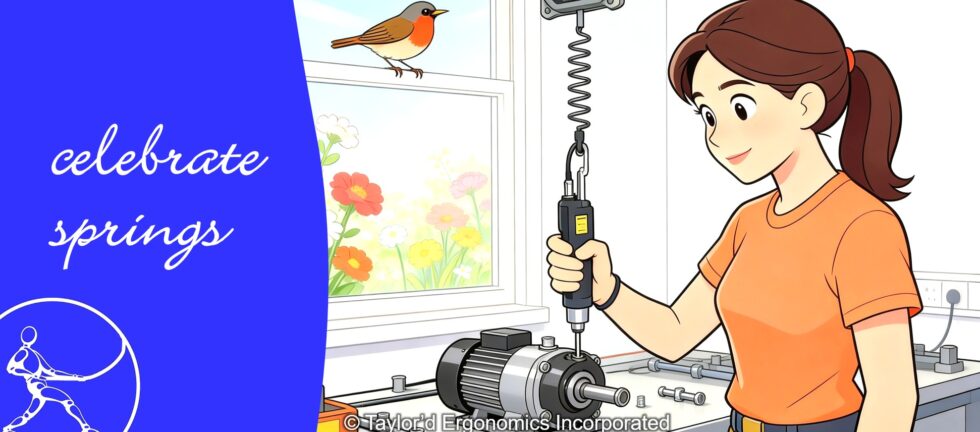
Celebrate Springs (the season AND the mechanical device)

If you’ve been following along, you know I can’t resist a good pun. Now that spring has sprung, it’s a good time to highlight how mechanical springs are used to support ergonomic design. In ergonomics, springs are often used to control force, maintain optimal working height, absorb vibration, or assist movement. Each of these functions […]
Read more

Designing a better harvest bag: An ergonomics study from Mexico

I’ve been staying in Mexico, where limes are everywhere here—served in drinks and squeezed over nearly every dish. That made me curious about the ergonomics of harvesting them. Naturally, I was intrigued by a recent research paper by Arroyo-Huerta and colleagues examining the lime harvest. In Mexico, approximately 1.6 million workers harvest more than 6 […]
Read more

Lifting isn’t just a work problem

When we talk about lifting, most people picture warehouses, construction sites, or manufacturing environments. We think about boxes, pallets, and maybe even lifting load limits. But for many people, the most frequent and most physically demanding lifting we do doesn’t happen at work at all. It happens at home, with family. Family Day prompts us […]
Read more

Proof in the Numbers: Ergonomics assessments improve comfort, quality, and retention

Our latest office ergonomics data shows that structured ergonomic assessments significantly reduce discomfort and deliver meaningful business impact. Among employees who completed follow-up surveys, productivity improved by 19%, work quality improved by 3%, and self-reported likelihood of staying in their job for at least another year increased by 40%. These findings reinforce that office ergonomics is not just about comfort; it supports safer work, better performance, and stronger employee retention.
Read more
Cart