

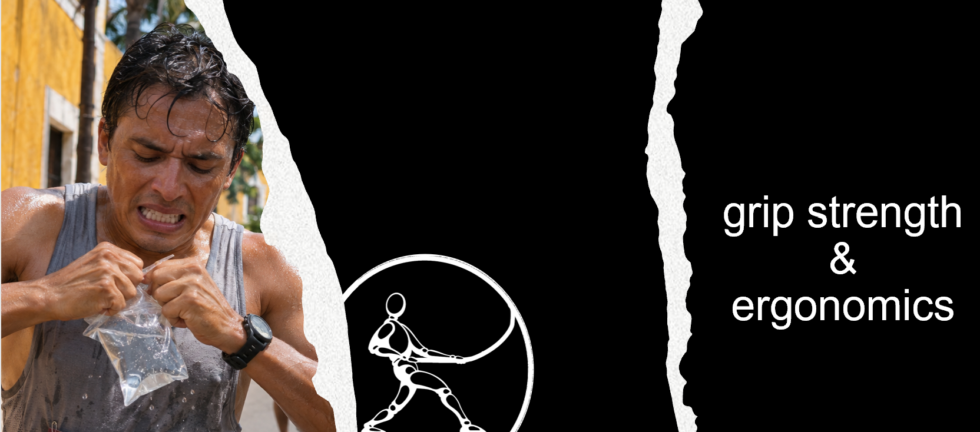
I’m working from Mexico’s Yucatán this month, and being away from home makes me notice the little differences in everyday products – especially the ones that test your grip strength. On Saturday, my sister and I travelled to Izamal to run a 5K race in the yellow city. At home, they would have handed us paper cups filled with water or electrolyte replacement along the route. Here, they handed us sealed bags of water.
First, it’s useful to know that the water from the taps in Mexico is not drinkable – we purchase water in large jugs. A Canadian in Mexico is well-advised to avoid drinking water that didn’t come from a sealed bottle.
Bagged water: 5/10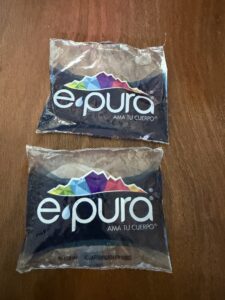
The trouble is, opening a bag of water while running is no small feat. I tried pretty hard to open it with my fingers, pinching the edges while pondering what my fingers had touched recently, and how clean the hands that had passed it to me were. Not successful. You might wonder why I wanted water at all – it was only a 5K, after all, not a marathon, and the race started at 6:30, so it wasn’t even hot yet. But alas, I was truly thirsty, so I bit and gnawed at the bag until it yielded some refreshment. I’d say that bagged water scores a 5/10 on the ergonomics front – yes, I needed water that was clean, but it was not easily obtained, and questionably sanitary.
Winged caps: 10/10 for grip strength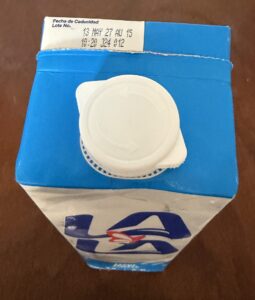
Not every difference is a step backward, though. Here, cartons with little screw-off caps have “wings” that allow your fingers to apply leverage (Tetra Pak calls its version the WingCap). Getting into a carton of milk or cream is so much easier than opening a carton at home! Research backs me up: in one Australian study, healthy older adults living independently struggled to open everyday packaging, including Tetra Pak cartons. In Canada, caps typically have small grooves, aimed at optimizing friction between your fingers and the cap, but my grip strength isn’t always up to the task. It always irritates me to have to ask for help with a simple task like that. I’m in good company, though. In one study of older adults, 16.2% had great difficulty opening a jar and 3.8% couldn’t open one at all without help. Occupational therapy researchers have also found that reduced grip strength can make everyday containers difficult – or even impossible – to open. But here, voila! An easy solution! Weakly gripped users, rejoice! Winged caps earn a solid 10/10.
My improvised toolkit: 3/10
We’ve also been getting some practice using hand tools in Mexico, attempting to fix water pumps with screwdrivers, pliers, pipe wrenches and percussive maintenance. Our improvised toolkit earns a generous 3/10. The pliers are the weak link: I don’t have enough grip strength to keep them clamped on the nut while I turn the screwdriver, so the nut spins right along with the bolt. What I wouldn’t give for a wrench set with the right-sized wrench to hold the nuts while I turn the bolts!
Grip strength naturally declines as we age – one large U.S. study found it peaks in our early 30s and is already 12–14% lower by age 60 – so these small design choices matter more every year. As you go through your day-to-day activities, watch for the small design choices that make life easier – and the ones that make it harder. Sometimes the difference between frustration and success is as small as a pair of wings on a cap.